
Why Heart Attack Increasing in India
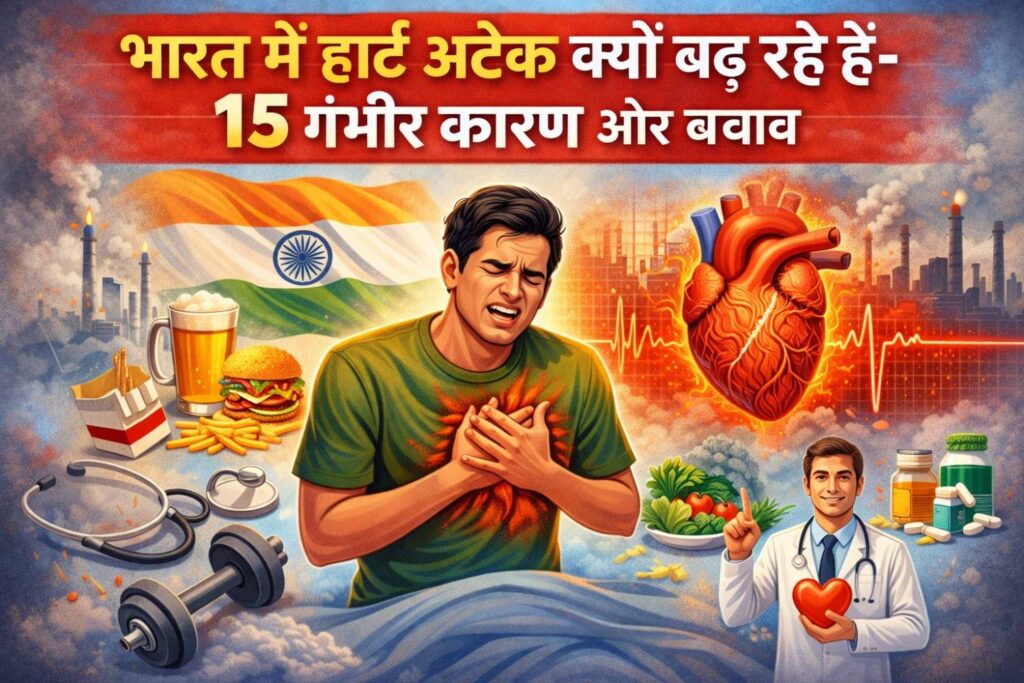
Why heart attack increasing in India — this question is on everyone's mind today. When seemingly fit young people, gym-goers, and celebrities suddenly pass away from heart attacks, fear is natural. Previously, heart attacks were considered a disease of those over 60, but today they are rapidly increasing among young people in their 30s and 40s.
Indian Council of Medical Research (ICMR) के हालिया data के अनुसार, भारत में हर साल 28 लाख से अधिक लोग heart attack से पीड़ित होते हैं, और इनमें से 50% मामले 50 साल से कम उम्र के लोगों में होते हैं। यह आंकड़ा चौंकाने वाला है और why heart attack increasing in India According to recent data from the Indian Council of Medical Research (ICMR), more than 2.8 million people in India suffer from heart attacks every year, and 50% of these cases occur in people under the age of 50. This statistic is shocking and
World Health Organization (WHO) की report बताती है कि cardiovascular diseases भारत में मौत का नंबर 1 कारण हैं, और भारतीय अन्य देशों की तुलना में 10 साल पहले heart problems से पीड़ित होते हैं। American Heart Association के अनुसार, South Asians (खासकर Indians) में genetic predisposition के कारण heart disease का risk 2-3 गुना ज्यादा है।
इस comprehensive guide में हम विस्तार से जानेंगे why heart attack increasing in India, कौन से factors जिम्मेदार हैं, warning signs क्या हैं, और सबसे महत्वपूर्ण — कैसे बचा जा सकता है।
Table of Contents
- Why Heart Attack Increasing in India: चौंकाने वाले Statistics
- Sedentary Lifestyle – बैठे रहने की आदत
- Unhealthy Diet और Fast Food Culture
- Stress और Mental Pressure
- Smoking और Tobacco का बढ़ता उपयोग
- Diabetes और High Blood Sugar
- Why Heart Attack Increasing in India: High Blood Pressure
- Obesity और मोटापे की महामारी
- Air Pollution का खतरनाक प्रभाव
- Lack of Physical Activity
- Alcohol और Drug Abuse
- Sleep Deprivation
- Genetic Factors और Family History
- Warning Signs और Symptoms
- Prevention और Bachav के उपाय
1. Why Heart Attack Increasing in India: चौंकाने वाले Statistics और Current Scenario
Why heart attack increasing in India को समझने के लिए पहले current statistics देखते हैं जो वाकई चिंताजनक हैं।
भारत में Heart Attack के आंकड़े:
Overall Numbers:
- 28 लाख+ cases हर साल
- हर 33 seconds में एक भारतीय को heart attack आता है
- 17.9 million deaths annually cardiovascular diseases से (globally)
- भारत में 1 out of 4 deaths heart disease से होती है
Age Factor:
Traditional Pattern (पहले):
- 60+ years: High risk
- 40-60 years: Moderate risk
- <40 years: Low risk
Current Pattern (अब):
- 50% cases under 50 years
- 25% cases under 40 years
- 10% cases under 30 years
यह dramatic shift है जो why heart attack increasing in India का alarming picture दिखाता है।
Young Indians at Risk:
Real Cases:
Celebrity Deaths (Recent Years):
- Siddharth Shukla (40 years) – Heart attack
- Puneeth Rajkumar (46 years) – Cardiac arrest
- KK (53 years) – Heart attack during concert
- Raju Srivastava (58 years) – Cardiac arrest
ये high-profile cases हैं, लेकिन हर दिन हजारों unknown cases हो रहे हैं।
Gender Distribution:
Men:
- 70% heart attack cases पुरुषों में
- Risk age: 45+ में significantly बढ़ता है
- लेकिन 30s में भी cases बढ़ रहे हैं
Women:
- 30% cases
- Post-menopause risk बढ़ता है (50+ age)
- लेकिन younger women में भी increase हो रहा है
Regional Variations:
Urban vs Rural:
Urban India:
- Higher incidence
- Lifestyle factors dominant
- Better healthcare access लेकिन late detection
Rural India:
- Rising trend
- Limited healthcare
- Awareness कम
State-wise Data:
Higher rates में:
- Kerala
- Punjab
- Tamil Nadu
- West Bengal
Comparison with Other Countries:
Indians vs Others:
- Indians को heart attack 10 years earlier होता है than Westerners
- At age 40: Indian का risk = 50-year-old American
- Survival rate भी कम है भारत में
Economic Impact:
Healthcare Burden:
- Annual cost: ₹2 lakh crore+
- Per patient cost: ₹3-5 lakh (average)
- Productivity loss: immeasurable
यह सब why heart attack increasing in India के gravity को दिखाता है।
Indian Heart Association पर latest data और research मिलती है।
2. Sedentary Lifestyle – Why Heart Attack Increasing in India का प्रमुख कारण
Why heart attack increasing in india का सबसे बड़ा कारण है sedentary lifestyle — यानी बैठे रहने की आदत।
क्या है Sedentary Lifestyle:
Definition:
दिन में 8+ घंटे बैठे रहना और minimal physical movement।
भारतीय Context:
Job Types:
- IT professionals: 10-12 hours desk job
- Call center employees: Night shifts + sitting
- Corporate jobs: Meeting rooms में बैठना
- Students: Online classes + gaming
Sitting is the New Smoking:
Research:
Mayo Clinic की study:
- 8+ hours sitting = Smoking के बराबर harmful
- Heart disease risk 147% increase
- Diabetes risk 112% increase
- Death risk 49% increase
Why Dangerous:
Metabolic Changes:
लंबे समय तक बैठने से:
- Blood flow slow होता है
- Cholesterol build-up बढ़ता है
- Insulin resistance develop होती है
- Fat burning कम होती है
Muscle और Bone:
- Muscles weak होती हैं
- Bone density कम होती है
- Posture problems होती हैं
Work from Home Impact:
COVID-19 Effect:
Pandemic के बाद:
- Commuting walking खत्म हो गई
- Lunch breaks में movement नहीं
- घर पर ज्यादा sitting
- Kitchen से desk तक का distance भी कम
Study:
Indian Medical Association survey:
- 67% people ने WFH में weight gain किया
- Physical activity 45% कम हो गई
- Screen time double हो गया
Technology और Lifestyle:
Screen Time:
Average Indian Urban Adult:
- Work: 8-10 hours
- Entertainment (TV/Phone): 4-5 hours
- Total: 12-15 hours sitting
Smartphone Culture:
- Walking भी कम
- Outdoor activities replace हो गए screen से
- Social interaction virtual हो गया
Children और Teenagers:
Alarming Trend:
- Physical education classes कम हो गए
- Sports participation घटा है
- Gaming और social media addiction बढ़ा है
- Obesity rates doubled in last decade
यह future generation के लिए why heart attack increasing in India का base बना रहा है।
Solutions:
Office में:
- हर 30 मिनट में 5 मिनट walk
- Standing desk use करें
- Walking meetings करें
- Stairs लें, lift नहीं
घर पर:
- TV देखते समय exercise करें
- Phone calls में walk करें
- Active hobbies अपनाएं
3. Unhealthy Diet – Why Heart Attack Increasing in India
Why heart attack increasing in India का दूसरा बड़ा कारण है हमारी बदलती dietary habits।
Traditional vs Modern Indian Diet:
पहले (Traditional):
Breakfast:
- Roti/Paratha with sabzi
- Poha, Upma, Idli
- Fresh fruits
- Homemade food
Lunch/Dinner:
- Dal-Roti-Sabzi-Chawal
- Seasonal vegetables
- Moderate portions
- Minimal oil
Snacks:
- Fruits
- Nuts
- Homemade namkeen
अब (Modern):
Breakfast:
- Skip करना या bread-butter
- Packaged cereals (high sugar)
- Biscuits with tea
Lunch:
- Restaurant food
- Fast food
- Heavy, oily
- Large portions
Dinner:
- Late timing (10-11 PM)
- Heavy meals
- Processed foods
Snacks:
- Chips, biscuits
- Instant noodles
- Packaged foods
- Sugary drinks
Fast Food Culture:
Rise of Fast Food:
Numbers:
- McDonalds: 400+ outlets भारत में
- Dominos: 1300+ outlets
- KFC, Burger King, Subway — हर शहर में
Consumption Pattern:
Urban youth:
- Fast food 2-3 बार/week
- Home delivery apps ने और easy बना दिया
- Convenience over health
Health Impact:
Trans Fats: French fries, burgers में:
- LDL (bad cholesterol) increase
- HDL (good cholesterol) decrease
- Arterial blockage
High Sodium: Pizza, burger, instant noodles:
- Blood pressure बढ़ता है
- Water retention
- Kidney stress
Excess Calories: एक typical fast food meal:
- 1500-2000 calories
- यह पूरे दिन की requirement है
- Weight gain accelerate होता है
Processed और Packaged Foods:
Hidden Dangers:
Ingredients:
- Preservatives
- Artificial colors
- Flavor enhancers
- High fructose corn syrup
Common Items:
- Instant noodles (Maggi, Top Ramen)
- Packaged snacks
- Soft drinks
- Fruit juices (packaged)
- Ready-to-eat meals
Why Harmful:
- Inflammation बढ़ाते हैं
- Insulin resistance करते हैं
- Arterial health को damage करते हैं
Sugar Epidemic:
Hidden Sugar:
भारतीयों की average sugar intake:
- 20-25 teaspoons/day
- WHO recommendation: 6 teaspoons/day
- 4x ज्यादा consumption
Sources:
- Chai/Coffee में sugar
- Sweets और desserts
- Cold drinks
- Packaged foods
- Bakery items
Impact:
Excess sugar:
- Diabetes risk बढ़ाता है
- Weight gain करता है
- Triglycerides बढ़ाता है
- Directly heart को damage करता है
Oil और Fats:
Cooking Methods:
Traditional:
- Moderate oil use
- Ghee (सीमित मात्रा में)
- Steaming, boiling
Modern:
- Deep frying
- Reused oil (बहुत harmful)
- Excessive butter/cheese
Vegetable Oil Problem:
Refined oils:
- Omega-6 की excess
- Inflammation promote करते हैं
- Heart-healthy नहीं हैं जितना advertise किया जाता है
Portion Sizes:
Super-sizing:
- Restaurant portions बहुत बड़े
- “Value for money” mentality
- Wastage भी और overeating भी
Mindless Eating:
- TV देखते हुए खाना
- Phone scrolling करते हुए
- Hunger cues ignore हो जाते हैं
Lack of Fruits और Vegetables:
Recommended:
- 5 servings/day fruits और vegetables
Reality:
- Average Indian: 2 servings/day से कम
- Fiber deficiency
- Vitamin और mineral deficiency
यह सब why heart attack increasing in India में major role play करता है।
4. Stress और Mental Pressure – Why Heart Attack Increasing in India
Why heart attack increasing in India में stress एक silent killer है।
Stress के स्तर बढ़ रहे हैं:
Global Stress Index:
- भारत world में 7th most stressed country (2024)
- 80% Indians report significant stress
- Pandemic ने और बढ़ा दिया
Types of Stress:
Work-related Stress:
Corporate Culture:
- Long working hours (10-12 hours)
- Tight deadlines
- Job insecurity
- Performance pressure
- Toxic workplace
Startup Culture:
- “Hustle” mentality
- Work-life balance नहीं
- 24/7 availability expected
Financial Stress:
Indian Middle Class:
- EMIs (home, car, personal loans)
- Education costs
- Medical expenses
- Inflation pressure
- Savings की चिंता
Family और Social Stress:
- Joint family issues
- Relationship problems
- Social comparison (social media)
- Peer pressure
- Expectations
Stress और Heart का Connection:
Physiological Response:
Stress के दौरान body:
Immediate:
- Adrenaline release होता है
- Heart rate बढ़ता है
- Blood pressure spike होता है
- Blood vessels constrict होती हैं
Chronic Stress:
लंबे समय तक stress से:
Cortisol Increase:
- “Stress hormone” chronically elevated
- Inflammation बढ़ती है
- Blood sugar levels disturb होते हैं
- Fat accumulation (especially belly fat)
Arterial Damage:
- Endothelial dysfunction (blood vessel lining damage)
- Plaque formation accelerate होता है
- Clotting tendency बढ़ती है
Heart Attack Risk:
American Heart Association study:
- High stress = 40% increased heart attack risk
- Acute stress (sudden) = immediate attack trigger कर सकता है
COVID-19 Pandemic Impact:
Mental Health Crisis:
Statistics:
- Anxiety cases: 70% increase
- Depression: 60% increase
- Sleep disorders: doubled
Heart Health:
- Delayed medical care
- Increased sedentary behavior
- Financial stress spike
- Social isolation
Young Professionals:
Millennial और Gen-Z:
Unique Stressors:
- Career uncertainty
- Student loan debt
- Housing unaffordability
- Social media pressure
- FOMO (Fear of Missing Out)
Coping Mechanisms:
- Unhealthy (smoking, alcohol, junk food)
- Lack of healthy outlets
Warning: Stress + Other Factors:
Stress अकेले नहीं मारता, लेकिन यह multiplier है:
Combination:
- Stress + Poor diet = 3x risk
- Stress + Smoking = 5x risk
- Stress + Sedentary lifestyle = 4x risk
यह why heart attack increasing in India का critical component है।
<a name="”section5″"></a>
5. Smoking और Tobacco – Why Heart Attack Increasing in India
Why heart attack increasing in India में tobacco use एक established और preventable risk factor है।
भारत में Tobacco Consumption:
Statistics:
- 267 million tobacco users भारत में
- दुनिया का 2nd largest tobacco consumer
- 13 lakh deaths annually tobacco से
Forms:
Smoking:
- Cigarettes
- Bidis
- Hookah (trendy हो गया है youth में)
- Electronic cigarettes (Vaping)
Smokeless:
- Gutka
- Pan masala
- Khaini
- Zarda
Smoking और Heart Attack:
कैसे नुकसान होता है:
Immediate Effects:
एक cigarette पीने के बाद:
- Heart rate 10-15 beats/minute बढ़ जाता है
- Blood pressure spike होता है
- Blood vessels constrict होती हैं
Long-term Damage:
Atherosclerosis: Smoking:
- Arterial walls को damage करती है
- LDL (bad cholesterol) oxidize करती है
- Plaque formation accelerate करती है
Blood Clotting:
- Platelets sticky हो जाती हैं
- Clot formation tendency बढ़ती है
- Thrombosis risk high होता है
Oxygen Reduction:
- Carbon monoxide hemoglobin को bind करता है
- Oxygen carrying capacity कम होती है
- Heart को ज्यादा काम करना पड़ता है
Youth में Smoking:
Alarming Trends:
College Students:
- 15-20% smoke regularly
- Peer pressure
- “Cool” factor
- Stress relief (perceived)
Young Professionals:
- Work stress → smoking
- Social smoking
- Networking के बहाने
Hookah Culture:
Misconception: “Hookah safer है than cigarettes”
Reality:
- One hookah session = 100 cigarettes
- More carbon monoxide
- Same nicotine addiction
- Same heart disease risk
E-Cigarettes और Vaping:
New Threat:
Marketing:
- “Safer alternative”
- Flavored varieties
- Youth को target करती है
Reality:
- Nicotine addiction same
- Cardiovascular effects present
- Long-term effects still unknown but concerning
Passive Smoking:
Second-hand Smoke:
Non-smokers जो smoke के environment में:
- 30% increased heart disease risk
- बच्चों में ज्यादा vulnerable
Tobacco Control Challenges:
Why Still Prevalent:
Cheap और Accessible:
- Bidis बहुत सस्ती
- Har corner पर available
- Strict enforcement नहीं
Social Acceptance:
- Cultural acceptance (कुछ areas में)
- Peer pressure
- Stress relief माना जाता है
Quitting Benefits:
Timeline:
20 minutes: Heart rate और BP normal होने लगते हैं 24 hours: Heart attack risk कम होने लगता है 1 year: Heart disease risk 50% कम 5 years: Stroke risk non-smoker जैसी 15 years: Heart disease risk लगभग non-smoker जैसी
यह why heart attack increasing in India में preventable factor है।
6. Diabetes – Why Heart Attack Increasing in India का गंभीर कारण
Show Image
Why heart attack increasing in India को समझने के लिए diabetes epidemic को समझना जरूरी है।
भारत – Diabetes Capital:
Statistics:
- 77 million diabetics भारत में (2024)
- By 2045: 134 million projected
- दुनिया में 2nd highest diabetic population
- 57% undiagnosed cases
Pre-diabetes:
- Additional 100 million+ Indians
- High risk of progression
Diabetes और Heart Attack का Link:
Why Diabetics at Higher Risk:
2-4x Risk: Diabetic होने से heart attack का risk 2-4 गुना बढ़ जाता है।
Mechanisms:
Hyperglycemia Damage:
High blood sugar:
- Endothelial cells को damage करती है
- Arterial inflammation बढ़ाती है
- Oxidative stress पैदा करती है
Accelerated Atherosclerosis:
- Plaque formation faster होता है
- Multiple vessels affected होती हैं
- Severe blockages होती हैं
Triple Threat:
Diabetics में typically होता है:
- High blood sugar
- High blood pressure (co-morbidity)
- High cholesterol (dyslipidemia)
यह combination extremely dangerous है।
Type 2 Diabetes Epidemic:
Why Increasing:
Lifestyle Changes:
- Sedentary behavior
- Calorie-dense diet
- Obesity rise
- Stress
Genetic Susceptibility:
Indians genetically predisposed:
- “Thin-fat” phenotype
- Abdominal obesity at lower BMI
- Insulin resistance earlier
Urbanization:
- Traditional diet से shift
- Physical labor कम
- White-collar jobs increase
Young-onset Diabetes:
Worrying Trend:
- 30-40 years में diabetes बढ़ रहा है
- Even teenagers और 20s में cases
Implications:
Young diabetes:
- Longer disease duration
- More complications
- Heart attack earlier age में
Silent Heart Attacks:
Diabetic Neuropathy:
Nerve damage से:
- Pain sensation कम हो जाती है
- Silent heart attacks होती हैं (without chest pain)
- Late diagnosis
- Worse outcomes
Management Challenges:
Compliance Issues:
- Medication adherence कम
- Lifestyle changes maintain करना मुश्किल
- Regular monitoring नहीं होती
Awareness Gap:
- Risk की seriousness समझ नहीं आती
- Preventive care neglect होती है
Prevention और Control:
For Non-diabetics:
Risk Reduction:
- Healthy diet
- Regular exercise (150 min/week)
- Weight management
- Annual screening (age 30+)
For Diabetics:
Tight Control:
- HbA1c < 7% maintain करें
- Blood pressure control (<130/80)
- Cholesterol management
- Regular cardio check-ups
Medications:
- Metformin (first-line)
- Newer drugs (SGLT2, GLP-1) जो heart protective भी हैं
यह why heart attack increasing in India में modifiable लेकिन critical factor है।
Diabetesindia.com पर detailed information मिलती है।
7. High Blood Pressure – Why Heart Attack Increasing in India
Why heart attack increasing in India में hypertension एक major contributor है।
Hypertension in India:
Statistics:
- 220 million Indians have high BP
- 30% urban population
- 20% rural population
- 50% undiagnosed
Age Factor:
- 25-40 age group में तेजी से बढ़ रहा है
Silent Killer:
Why “Silent”:
High BP के usually कोई symptoms नहीं होते:
- Headache (sometimes)
- Dizziness (rare)
- ज्यादातर asymptomatic
Result:
- Late diagnosis
- Uncontrolled BP for years
- Organ damage हो चुकी होती है
BP और Heart Attack:
How It Damages:
Arterial Stress:
Consistently high pressure:
- Artery walls को damage करता है
- Micro-tears बनाते हैं
- Plaque deposition site बनते हैं
Left Ventricular Hypertrophy:
- Heart muscle thick हो जाती है
- Oxygen demand बढ़ती है
- Heart attack risk increases
Reduced Coronary Flow:
- High pressure coronary arteries को affect करता है
- Myocardial ischemia होती है
Risk Levels:
Normal: <120/80 mmHg Elevated: 120-129/<80 Stage 1: 130-139/80-89 Stage 2: ≥140/≥90 Hypertensive Crisis: >180/120 (emergency)
Causes in Indian Context:
Diet:
- High sodium intake (pickles, papad, packaged foods)
- Low potassium (insufficient fruits)
Lifestyle:
- Stress
- Lack of exercise
- Obesity
Genetics:
- Family history strong predictor
Young Hypertensives:
Rising Trend:
20-30 age group में:
- IT professionals
- High-stress jobs
- Poor lifestyle
Consequences:
- Heart disease risk 20 साल पहले शुरू होती है
Management:
Lifestyle:
- DASH diet (Dietary Approaches to Stop Hypertension)
- Regular exercise
- Weight loss
- Stress management
- Limit alcohol
Medications:
- Multiple classes available
- Personalized treatment
- Regular monitoring
यह why heart attack increasing in India में controllable factor है।
8. Obesity – Why Heart Attack Increasing in India की बढ़ती समस्या
Why heart attack increasing in India में obesity epidemic की बड़ी भूमिका है।
Obesity in India:
Statistics:
- 135 million obese Indians
- Urban areas: 25-30% obesity rate
- Rural areas: 15% (increasing rapidly)
- Childhood obesity: doubled in decade
BMI और Indian Standards:
Global Standards:
- Normal: 18.5-24.9
- Overweight: 25-29.9
- Obese: ≥30
Indian Standards (revised):
- Normal: 18.5-22.9
- Overweight: 23-24.9
- Obese: ≥25
क्यों different? Indians को lower BMI पर भी metabolic complications होती हैं।
Central Obesity:
Belly Fat – Dangerous:
Waist circumference:
- Men: >90 cm (risk)
- Women: >80 cm (risk)
Visceral Fat:
- Internal organs के around
- Metabolically active
- Inflammatory chemicals release करता है
- Heart disease risk बढ़ाता है
Obesity और Heart Attack:
Multiple Mechanisms:
Direct Effects:
- Heart को ज्यादा blood pump करना पड़ता है
- Enlarged heart (cardiomyopathy)
Indirect Effects:
- Diabetes risk
- Hypertension risk
- High cholesterol
- Sleep apnea
Indian “Thin-Fat” Phenomenon:
Unique Problem:
Indians:
- Normal BMI पर भी high body fat %
- Central obesity prominent
- Metabolically obese
Result:
- “Healthy” दिखने वाले लोग भी risk में
Causes:
Caloric Surplus:
- Large portions
- Calorie-dense foods
- Frequent snacking
Physical Inactivity:
- Sedentary jobs
- Screen time
- No exercise routine
Sleep Deprivation:
- Hormone disruption
- Increased appetite
- Reduced metabolism
Childhood Obesity:
Future Risk:
Obese children:
- 70% probability adult obesity
- Early onset metabolic diseases
- Heart disease in 30s-40s
Causes:
- Junk food availability
- Less outdoor play
- Academic pressure (no time for sports)
Weight Management:
Realistic Goals:
- 5-10% weight loss = significant risk reduction
- Slow और steady (0.5-1 kg/week)
Strategies:
- Caloric deficit (but not extreme)
- Portion control
- Regular exercise
- Behavioral changes
यह why heart attack increasing in India में addressable issue है।
9. Air Pollution – Why Heart Attack Increasing in India का Environmental Factor
Show Image
Why heart attack increasing in India में air pollution एक often-overlooked लेकिन serious factor है।
India का Air Quality Crisis:
Statistics:
- 83 of 100 world’s most polluted cities भारत में (2023)
- Delhi AQI regularly 400-500 (hazardous)
- 1.67 million deaths annually air pollution से
Air Pollution और Heart Health:
How It Damages:
Particulate Matter (PM2.5):
Tiny particles (<2.5 microns):
- Lungs में deeply penetrate करते हैं
- Bloodstream में enter करते हैं
- Directly heart तक पहुंचते हैं
Cardiovascular Effects:
Inflammation:
- Systemic inflammation trigger करते हैं
- C-reactive protein levels बढ़ते हैं
Oxidative Stress:
- Free radicals generate होते हैं
- Endothelial dysfunction होती है
Blood Clotting:
- Platelet activation बढ़ता है
- Thrombosis risk increases
Atherosclerosis:
- Plaque formation accelerate होता है
- Arterial stiffness बढ़ती है
Research Evidence:
Studies:
Lancet Study (2020):
- PM2.5 exposure → 24% increased heart attack risk
- Long-term exposure → chronic cardiovascular damage
Harvard Study:
- Every 10 μg/m³ increase in PM2.5 → 10% increased cardiovascular mortality
Indian Cities – Danger Zones:
Most Polluted:
- Delhi-NCR: AQI 300-500 (winter)
- Kolkata: Industrial pollution
- Mumbai: Vehicle emissions
- Lucknow, Kanpur: Construction dust
- Patna, Gaya: Biomass burning
Sources of Pollution:
Vehicular Emissions:
- Increasing car ownership
- Old diesel vehicles
- Traffic congestion
Industrial:
- Factory emissions
- Construction dust
Biomass Burning:
- Stubble burning (Punjab, Haryana)
- Household cooking (rural)
Seasonal Factors:
- Winter inversion traps pollution
- Diwali firecrackers spike
Vulnerable Populations:
High Risk:
- Pre-existing heart disease
- Elderly
- Children
- Diabetics
- Pregnant women
Acute vs Chronic Exposure:
Acute (Short-term):
- AQI spike के दिन heart attack cases बढ़ते हैं
- Emergency admissions spike होती हैं
Chronic (Long-term):
- Years of exposure → cumulative damage
- Accelerated atherosclerosis
- Early onset heart disease
Protection Strategies:
Individual Level:
Monitor AQI:
- Apps use करें (AQICN, CPCB)
- High AQI days पर outdoor activities avoid करें
Masks:
- N95 masks (properly fitted)
- Surgical masks inadequate हैं
Air Purifiers:
- Home और office में
- HEPA filters preferred
Indoor Air Quality:
- Ventilation balance
- Indoor plants (limited benefit)
- Avoid indoor smoking
Lifestyle:
Exercise Timing:
- Early morning या evening (when AQI lower)
- Indoor exercise on bad days
Diet:
- Antioxidant-rich foods
- Omega-3
- Vitamin C और E
यह why heart attack increasing in India में environmental dimension है।
10. Lack of Physical Activity – Why Heart Attack Increasing in India
Why heart attack increasing in India में physical inactivity एक major modifiable risk factor है।
India की Physical Activity Crisis:
Statistics:
- 54% Indians physically inactive (WHO data)
- Urban areas: 60% sedentary
- Only 23% meet WHO recommendations (150 min/week moderate exercise)
Recommended vs Reality:
WHO Guidelines:
Adults:
- 150-300 minutes moderate aerobic activity/week
- OR 75-150 minutes vigorous activity/week
- Plus muscle-strengthening 2 days/week
Reality:
- Average Indian: <30 minutes/week exercise
- Majority: कोई structured exercise नहीं
Why Indians Don’t Exercise:
Barriers:
Time:
- Long working hours
- Commute time
- Family responsibilities
Infrastructure:
- Limited parks और gyms (affordable)
- Unsafe neighborhoods (especially for women)
- Weather (extreme heat/cold)
Cultural:
- Exercise को priority नहीं माना जाता
- “Work hard, rest at home” mentality
- Gym को luxury माना जाता है
Knowledge Gap:
- Importance की awareness कम
- How to exercise correctly नहीं पता
Physical Inactivity और Heart:
Cardiovascular Impact:
Deconditioning:
- Heart muscle weak होती है
- Cardiac output कम होता है
- Endurance घटती है
Metabolic Effects:
- Insulin resistance बढ़ती है
- Lipid profile बिगड़ता है
- Weight gain होता है
Risk Magnification:
Physical inactivity:
- Alone: 30% increased heart disease risk
- With poor diet: 60% increased risk
- With obesity: 80% increased risk
Benefits of Exercise:
Cardiovascular:
Regular Exercise:
- Heart muscle मजबूत होती है
- Resting heart rate कम होता है
- Blood pressure control होता है
- Cholesterol improve होता है
Blood Vessels:
- Endothelial function better होता है
- New blood vessels form होती हैं (angiogenesis)
- Arterial flexibility बढ़ती है
Weight Management:
- Calorie burning
- Muscle mass preservation
- Metabolism boost
Mental Health:
- Stress reduction
- Depression और anxiety कम होते हैं
Types of Exercise:
Aerobic:
- Walking, jogging
- Cycling
- Swimming
- Dancing
Strength Training:
- Weight lifting
- Bodyweight exercises
- Resistance bands
Flexibility:
- Yoga
- Stretching
Combination Best: Ideal routine में सब शामिल होने चाहिए।
Starting Exercise:
For Beginners:
Week 1-2:
- 10 minutes walking daily
- Low intensity
Week 3-4:
- 20 minutes
- Slightly faster pace
Week 5-8:
- 30 minutes
- Moderate intensity
Build Gradually: Sudden intense exercise risky है, खासकर sedentary लोगों के लिए।
Exercise Safety:
Precautions:
Consult Doctor:
- Age 40+ और starting exercise
- Pre-existing conditions
- Family history of heart disease
Warning Signs to Stop:
- Chest pain
- Severe breathlessness
- Dizziness
- Irregular heartbeat
Workplace Wellness:
Corporate Initiatives:
- On-site gyms
- Group fitness classes
- Standing desks
- Walking meetings
यह why heart attack increasing in India में simple लेकिन powerful solution है।
11. Alcohol और Substance Abuse – Why Heart Attack Increasing in India
Why heart attack increasing in India में alcohol और drugs का बढ़ता उपयोग concerning है।
Alcohol Consumption in India:
Statistics:
- 30% Indian adults consume alcohol
- Binge drinking बढ़ रहा है (especially youth)
- India में alcohol consumption 38% increased (last decade)
Alcohol और Heart:
Double-edged Sword:
Moderate Drinking (claimed benefits):
- 1 drink/day (women), 2 drinks/day (men)
- कुछ studies suggest slight HDL increase
But Reality:
Most Indians don’t drink moderately:
- Binge pattern common है
- “Social drinking” often excessive है
Harmful Effects:
Direct Cardiac Damage:
Cardiomyopathy:
- Heavy drinking heart muscle को weaken करती है
- Heart enlarged हो जाता है
- Pumping efficiency कम होती है
Arrhythmias:
- “Holiday Heart Syndrome”
- Atrial fibrillation risk
- Sudden cardiac death
Blood Pressure:
- Chronic drinking BP बढ़ाती है
- Dose-dependent relationship
Triglycerides:
- Alcohol triglycerides बढ़ाती है
- Atherosclerosis risk increases
Binge Drinking Culture:
Definition: 4-5 drinks in 2 hours
Prevalence:
- College students में common
- Corporate parties
- Weekend binging
Cardiac Risk:
Even occasional binge:
- Acute heart attack trigger कर सकती है
- Especially if underlying risk factors हैं
Drugs और Stimulants:
Cocaine और Amphetamines:
Cardiovascular Effects:
- Severe vasoconstriction
- Blood pressure spike
- Heart attack even in young
- Arrhythmias
Usage in India:
- Urban clubs में availability
- “Party drugs”
- Growing problem
Tobacco + Alcohol:
Synergistic Effect:
- Together ज्यादा harmful than alone
- Risk multiplicative है, not just additive
Young Adults at Risk:
Peer Pressure:
- “Cool” factor
- Social acceptance
- FOMO
Lack of Awareness:
- Cardiac risks की knowledge कम
- “I’m young, I’ll be fine” mentality
Safe Limits:
If You Drink:
Men: Max 2 standard drinks/day Women: Max 1 standard drink/day
1 Standard Drink:
- Beer: 355 ml
- Wine: 148 ml
- Spirits: 44 ml
Better: कम से कम या बिल्कुल नहीं
Quitting Benefits:
Timeline:
24 hours: Heart rate normalize होने लगता है Weeks: Blood pressure improve होता है Months: Lipid profile better होता है 1 year: Heart disease risk significantly कम
यह why heart attack increasing in India में modifiable factor है।
12. Sleep Deprivation – Why Heart Attack Increasing in India का Silent Contributor
Why heart attack increasing in India में inadequate sleep एक underrecognized factor है।
India की Sleep Crisis:
Statistics:
- 93% Indians sleep deprived (survey data)
- Average sleep: 6 hours (vs recommended 7-9)
- 67% report poor sleep quality
Why Indians Don’t Sleep:
Work Culture:
- Long hours
- Night shifts (IT, call centers)
- “Hustle” culture
- Work emails late night
Lifestyle:
- Late-night TV/smartphone
- Social commitments
- Traffic/commute stress
Environmental:
- Noise pollution
- Light pollution
- Hot weather
Sleep और Heart Health:
Cardiovascular Connection:
Short Sleep (<6 hours):
Research shows:
- 48% increased heart attack risk
- 15% increased stroke risk
- High blood pressure
- Diabetes risk
Mechanisms:
Sympathetic Activation:
- Stress hormones elevated रहते हैं
- Continuous “fight or flight”
Inflammation:
- Chronic inflammation markers बढ़ते हैं
- C-reactive protein elevated
Metabolic Disruption:
- Glucose metabolism affected
- Insulin resistance
- Weight gain (appetite hormones disturbed)
Blood Pressure:
- Nocturnal BP dipping नहीं होती
- Sustained high BP
- Hypertension risk
Sleep Apnea:
Obstructive Sleep Apnea (OSA):
Prevalence:
- 7-15% Indian population
- Under-diagnosed
What Happens:
- Breathing repeatedly stops during sleep
- Oxygen levels drop
- Heart stressed
Cardiac Risk:
OSA associated with:
- Hypertension (50% OSA patients)
- Atrial fibrillation
- Heart failure
- Sudden cardiac death
Risk Factors:
- Obesity
- Large neck circumference
- Male gender
Symptoms:
- Loud snoring
- Witnessed breathing pauses
- Daytime sleepiness
- Morning headaches
Quality vs Quantity:
Both Matter:
7 hours fragmented sleep < 6 hours consolidated sleep
Sleep Stages Important:
- Deep sleep (repair)
- REM sleep (restoration)
Shift Work:
Night Shift Workers:
Circadian rhythm disruption:
- 40% increased heart disease risk
- Metabolic syndrome common
- Sleep quality poor
India Context:
- IT industry
- Healthcare workers
- Manufacturing
- Security personnel
Sleep Hygiene:
Recommendations:
Timing:
- Consistent sleep schedule
- Even weekends
Environment:
- Dark, quiet, cool room
- Comfortable mattress
Routine:
- Wind-down routine
- No screens 1 hour before bed
- Light reading या relaxation
Avoid:
- Caffeine after 4 PM
- Heavy meals 2-3 hours before bed
- Alcohol (disrupts sleep quality)
When to Seek Help:
Warning Signs:
- Chronic insomnia
- Loud snoring with pauses
- Excessive daytime sleepiness
- Morning headaches
Sleep Study: Polysomnography diagnose कर सकता है।
यह why heart attack increasing in India में addressable issue है।
13. Genetic Factors – Why Heart Attack Increasing in India
Why heart attack increasing in India में genetics की unique role है।
Indian Genetic Predisposition:
South Asian Paradox:
Indians (South Asians):
- Higher risk than other ethnicities
- Earlier age of onset (10 years earlier)
- More severe disease
Why?
Genetic Factors:
APOA5 Gene Variant:
- Common in Indians
- Elevated triglycerides
- Increased CAD risk
9p21 Locus:
- Strongest genetic risk factor for CAD
- More prevalent in South Asians
Lipoprotein(a):
- Elevated levels common in Indians
- Atherogenic particle
- Genetic determination
Metabolic Syndrome:
“Thin-Fat” Indians:
At same BMI:
- Indians have higher body fat %
- More visceral fat
- Earlier metabolic complications
Why?
Evolutionary adaptation:
- “Thrifty gene” hypothesis
- Survival advantage (historically)
- Disadvantage in modern plenty
Family History:
Strong Predictor:
Risk Levels:
First-degree relative with CAD:
- Father/Brother <55 years: 2x risk
- Mother/Sister <65 years: 2x risk
Multiple relatives: Risk even higher
Early-onset in Family: Most significant
Sibling with early MI: Highest risk
Inherited Conditions:
Familial Hypercholesterolemia:
Genetic high cholesterol:
- 1 in 250-500 Indians
- LDL very high (>190 mg/dL)
- Heart attacks in 30s-40s if untreated
Diagnosis:
- Family history + high LDL
- Genetic testing
Treatment:
- Aggressive statin therapy
- Early intervention crucial
Can’t Change Genes, But…
Modifiable Factors More Important:
Genetic risk + Poor lifestyle = Very high risk Genetic risk + Healthy lifestyle = Moderate risk
Epigenetics:
Lifestyle affects gene expression:
- Diet
- Exercise
- Stress
- Sleep
Family Screening:
If Family History:
Earlier Screening:
- Lipid profile: Age 20-25
- BP monitoring: Age 18+
- Diabetes screening: Age 25
- ECG baseline: Age 30
Regular Follow-up:
- Annual check-ups
- Closer monitoring
Genetic Testing:
When Considered:
- Strong family history
- Early-onset CAD
- Unexplained high cholesterol
Limitations:
- Costly
- Limited availability
- Interpretation complex
यह why heart attack increasing in India में non-modifiable लेकिन awareness-worthy factor है।
14. Warning Signs – Why Heart Attack Increasing in India में जानलेवा Ignorance
Show Image
Why heart attack increasing in India में एक बड़ा कारण है warning signs को ignore करना।
Classic Symptoms:
Chest Pain/Discomfort:
Nature:
- Pressure, squeezing, fullness
- “Elephant sitting on chest”
- Center या left side
- 5+ minutes duration
Radiation:
- Left arm (सबसे common)
- Jaw
- Back
- Neck
- Stomach
Associated Symptoms:
- Breathlessness
- Sweating (cold sweat)
- Nausea/vomiting
- Lightheadedness
- Extreme fatigue
Atypical Symptoms:
Women, Diabetics, Elderly में:
- Subtle chest discomfort
- Fatigue (predominant)
- Indigestion feeling
- Shoulder/back pain
- Jaw pain
Silent Heart Attacks:
Especially diabetics:
- No pain (neuropathy)
- Detected later on ECG
Warning Signs Before Heart Attack:
Days/Weeks Before:
Angina:
- Exertional chest discomfort
- Relieved by rest
- Indicates significant blockage
Increasing Fatigue:
- Unusual tiredness
- Simple tasks difficult
Breathlessness:
- On exertion
- Progressively worsening
Indian Context – Delays:
Why Late Presentation:
Symptom Denial:
- “Acidity hai”
- “Thakan hai”
- “Stress hai”
- “Kal doctor ko dikhayenge”
Gender Factor:
Women:
- Symptoms dismiss करती हैं
- Family को priority देती हैं
- Late presentation common
Cultural Factors:
- Reluctance to “bother” others
- “Thoda wait kar lete hain”
- Alternative remedies first try करना
Golden Hour:
Critical Time Window:
First 90 minutes:
- Maximum benefit from treatment
- “Door-to-balloon” time critical
- Clot-busting drugs most effective
Every Minute Counts:
- More heart muscle dies
- Worse outcomes
- Higher mortality
Indian Reality:
Average time to hospital: 4-6 hours
- Traffic delays
- Symptom denial
- Access issues
यह delay why heart attack increasing in India में mortality बढ़ाता है।
What to Do:
If Symptoms Occur:
Immediate Actions:
- Call Ambulance (108/102) – driving yourself dangerous है
- Chew Aspirin (300 mg) unless allergic
- Sit/lie down – don’t exert
- Loosen tight clothing
- Stay calm – anxiety worsens
Do NOT:
- Wait and watch
- Drive yourself
- Eat/drink anything
- Take heavy breath (mild breathing okay)
If Someone Else:
CPR Awareness:
- If unconscious और no pulse
- Chest compressions (100-120/min)
- “Stayin’ Alive” beat
- Until help arrives
AED (Automated External Defibrillator):
- Available in some public places
- Can save life
Emergency Response:
Hospital:
Immediate Tests:
- ECG
- Cardiac enzymes (Troponin)
- Chest X-ray
Treatment Options:
Angioplasty (Primary PCI):
- Blockage खोलना
- Stent placement
- Gold standard
Thrombolysis:
- Clot-dissolving drugs
- If angioplasty unavailable immediately
यह knowledge why heart attack increasing in India में life-saving हो सकती है।
15. Prevention – Why Heart Attack Increasing in India से कैसे बचें
Why heart attack increasing in India को समझने के बाद सबसे important है prevention।
Heart-Healthy Lifestyle:
Diet:
Include:
- Fruits और vegetables (5+ servings)
- Whole grains
- Lean proteins (fish, chicken, legumes)
- Nuts और seeds
- Healthy fats (olive oil, ghee in moderation)
Limit:
- Trans fats (eliminate)
- Saturated fats
- Sodium (<5g/day)
- Added sugars
- Processed foods
Indian Heart-Healthy Diet:
- Dal-roti-sabzi (balanced portions)
- Seasonal vegetables
- Minimal oil
- Home-cooked meals
Physical Activity:
Recommendation:
- 150 minutes moderate exercise/week
- OR 75 minutes vigorous exercise
- Strength training 2 days/week
Practical:
- 30 minutes brisk walk daily
- Stairs instead of elevator
- Active hobbies (cycling, swimming, dancing)
Weight Management:
Target:
- BMI 18.5-22.9 (Indian)
- Waist circumference: <90 cm (men), <80 cm (women)
Sustainable Approach:
- Slow weight loss (0.5-1 kg/week)
- Lifestyle changes, not crash diets
Stress Management:
Techniques:
- Meditation/Yoga: 15-20 min daily
- Deep breathing: Throughout day
- Hobbies: Relaxing activities
- Social connections: Strong support system
- Work-life balance: Set boundaries
- Sleep: 7-9 hours priority
Regular Health Screening:
Age-based Guidelines:
20-30 years:
- BP check: Every 2 years
- Lipid profile: If risk factors
- Diabetes: If overweight
30-40 years:
- BP: Annually
- Lipid profile: Every 5 years
- Diabetes: Every 3 years
- ECG baseline
40+ years:
- BP: Every 6 months
- Lipid profile: Every 2 years
- Diabetes: Annually
- ECG: Every 2-3 years
- TMT/Echo: If symptoms
High-risk individuals:
- More frequent monitoring
- Cardiologist consultation
Know Your Numbers:
Target Ranges:
Blood Pressure:
- Optimal: <120/80 mmHg
- Normal: <130/85 mmHg
Cholesterol:
- Total: <200 mg/dL
- LDL: <100 mg/dL (<70 if very high risk)
- HDL: >40 mg/dL (men), >50 mg/dL (women)
- Triglycerides: <150 mg/dL
Blood Sugar:
- Fasting: <100 mg/dL
- HbA1c: <5.7%
BMI: 18.5-22.9 (Indian)
Medication Compliance:
If Prescribed:
Hypertension/Diabetes/Cholesterol:
- Take regularly
- Don’t stop without doctor
- Side effects तो report करें, बंद मत करें
Aspirin:
- If prescribed (not for everyone)
- Low-dose daily
Quit Tobacco:
All Forms:
- Smoking
- Gutka
- Pan masala
Benefits:
- Immediate risk reduction
- 1 year: 50% risk reduction
- 15 years: Risk almost normal
Help Available:
- Nicotine replacement
- Counseling
- Quitline: 1800-11-2356
Limit Alcohol:
If You Drink:
- Moderation (defined earlier)
- Better: Minimal या avoid
Family Planning:
If Family History:
- Aggressive risk factor modification
- Earlier screening
- Genetic counseling (if appropriate)
- Educate family members
Community Awareness:
Spread Knowledge:
- Warning signs awareness
- CPR training
- Encourage healthy lifestyle in family
Healthcare System:
Advocacy Needed:
- Better emergency response
- Affordable healthcare
- Public defibrillators
- Health education
यह सब steps मिलकर why heart attack increasing in India को reverse कर सकते हैं।
निष्कर्ष
Why heart attack increasing in India — इस सवाल का जवाब simple नहीं है। यह multiple factors का combination है:
मुख्य कारण (Summary):
- ✅ Sedentary lifestyle – बैठे रहने की आदत
- ✅ Unhealthy diet – Fast food, processed foods
- ✅ Chronic stress – Work pressure, mental strain
- ✅ Smoking/tobacco – Widespread use
- ✅ Diabetes epidemic – 77 million+ Indians
- ✅ Hypertension – 220 million+ Indians
- ✅ Obesity – Central adiposity
- ✅ Air pollution – Environmental toxin
- ✅ Physical inactivity – 54% Indians inactive
- ✅ Alcohol abuse – Binge drinking culture
- ✅ Sleep deprivation – Chronic insufficient sleep
- ✅ Genetic predisposition – South Asian susceptibility
- ✅ Symptom ignorance – Late presentation
- ✅ Limited awareness – Prevention knowledge gap
- ✅ Healthcare access – Delays, affordability
The Perfect Storm:
भारत में यह सब factors एक साथ आ रहे हैं:
- Rapid urbanization without health infrastructure
- Western lifestyle adoption without awareness
- Traditional diet का loss
- Technology overuse
- Economic pressure और competition
Hope है:
अच्छी बात यह है कि ज्यादातर factors modifiable हैं:
Individual Level:
- Lifestyle changes अपना सकते हैं
- Screening कर सकते हैं
- Early detection possible है
- Treatment effective है
Society Level:
- Awareness बढ़ रही है
- Healthcare improving है
- Policies बन रही हैं
Call to Action:
आज से शुरुआत करें:
- Health check-up book करें
- 30-minute walk शुरू करें
- Junk food कम करें
- Stress management techniques अपनाएं
- Family को educate करें
Remember:
Prevention हमेशा Cure से बेहतर है।
Heart attack अचानक नहीं आता — यह years की unhealthy lifestyle का result है। लेकिन अच्छी खबर यह है कि हम बदलाव ला सकते हैं।
आपका दिल आपकी सबसे कीमती asset है। इसका ख्याल रखें। ❤️
Why heart attack increasing in India — अब आप जानते हैं। अब action लेने का time है।
Emergency Numbers:
- Ambulance: 108, 102
- National Health Helpline: 1800-180-1104
Disclaimer: यह article सामान्य जानकारी के लिए है। Medical emergency में तुरंत doctor से संपर्क करें। इस article को medical advice का substitute न मानें।
Related Articles:
- Heart Attack के लक्षण पहचानें
- हार्ट हेल्थी डाइट प्लान
- Cholesterol कैसे कम करें
- High Blood Pressure Control करने के तरीके
- CPR कैसे करें – Life Saving Guide
External Resources: